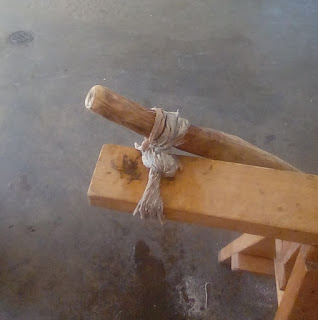
A little on Arrow Shafts
War archers of yore picked up enemy arrows and fired them back, so accuracy is not dependent on arrow consistency.
When you know your bow, you will know how far it can throw a shaft of an assessed weight - like being able to throw objects of any weight to a desired location.
Uncommonly skilled archers know that your hands can judge and execute accurate shots with varying variables. On the other hand, it is documented the importance of constancy between arrows. Kings of Egipt have been found with quivers baring arrows of different lenths.
The arrow must be straight. In order for the string at the rear to transfer force to the tip of the arrow and fire predictably, controlled and true, the straight shaft must have an appropriate amount of rigidity based on the strength of the bow.
A weak shaft wood ("under spined"), may be straight, but it can only push so much weight for a tip, not fold under the force of the string, and make up for the imperfections in arrow cast.
Self cut hardware store lumber pine is a brittle, light, soft wood, quite weak and less able to take the heavy hits of practice during winter on a frozen hill with iron tips; avoid this wood for arrows.
Lumber and online cedar shafts hold their straightness, but they are weak, especially when compared to the incredibly strong shoots from dried cut saplings, which last shot after shot. A harvested shoot shaft can maintain greater rigidity in proportion to its diameter than cedar and certainly cheap cut lumber shafts, but paradoxically need to heat straightend frequently. Shoot shafts are, relatively speaking, the best shaft material to use, though I have not used aluminum enough to say for sure.
I would err on the side of a slightly over rigid (heavy spined) shaft that has a higher chance of hitting and holding true during cast.
In the past, when arrows were made of random woods and still had to fire from high powered bows, they were carved “broad breasted” or fatter in the center and then taper to the tips (apparently). I prefer front heavy as of today. I use my shafts top end forward - heavier tips, and you can make a broad nock by wet heating and splitting.